



Everyone loves puppies, we know. It’s scientifically proven that they’re heart-meltingly cute. But there’s more to the little fur babies than those adorable puppy eyes.
So, in honor of National Puppy Day, here are things everyone should know about these four-legged snuggle buddies.
Table of Contents
THE WORD PUPPY HAS FRENCH ROOTS
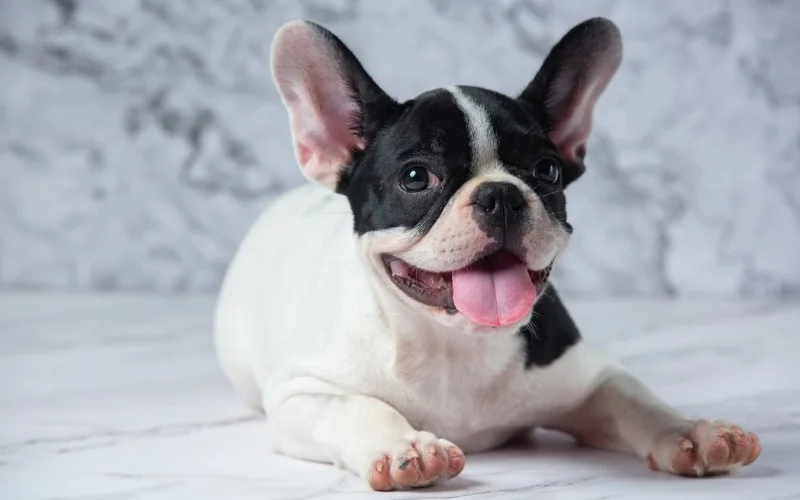
Etymologists think the term puppy may come from poupeé, a French word meaning doll or toy. The word puppy doesn’t appear to have entered the English language until the late 16th century—before that, English speakers called baby dogs whelps.
William Shakespeare’s King John, believed to have been written in the 1590s, is one of the earliest known works to use the (super cute) term puppy-dog.
PUPPIES EVOLVED TO BE BLIND AND DEAF AT BIRTH
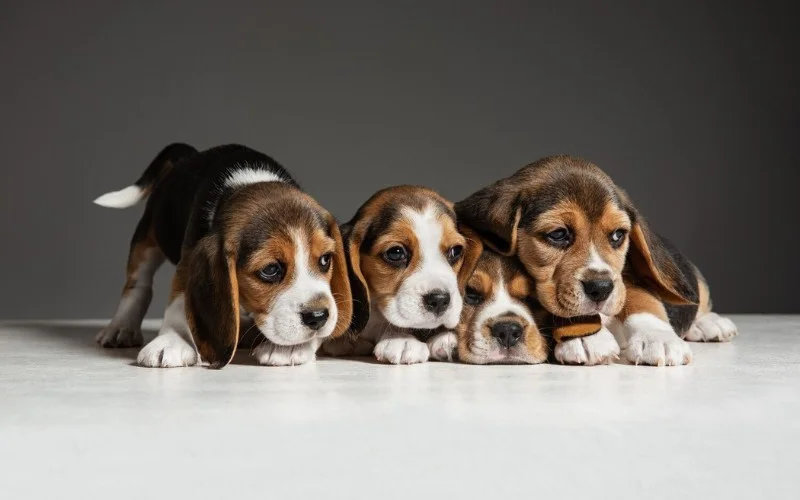
Puppies are functionally blind and deaf at birth. Their eyes are firmly shut on day one, and their ear canals are closed. Why? In brief, it’s part of an evolutionary trade-off. Since pregnancy can hurt a carnivore’s ability to chase down food, dogs evolved to have short gestation periods.
As a result, brief pregnancies meant that canine mothers wouldn’t need to take prolonged breaks from hunting. However, because dog embryos spend such a short time in the womb (only two months or so), puppies aren’t born fully developed—and neither are their eyes or ears.
PUPPIES HAVE BABY TEETH, TOO
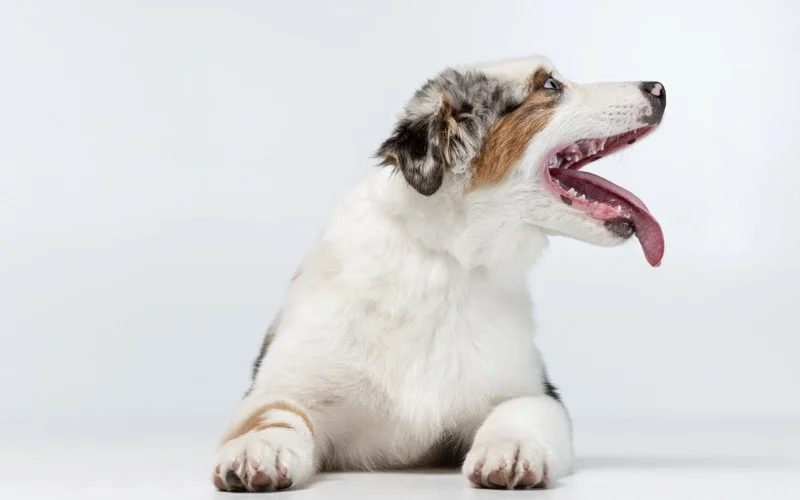
Like many newborn mammals, puppies are born entirely toothless. At 2 to 4 weeks, 28 baby teeth will come in. Those baby teeth fall out around 12 to 16 weeks old, and by the time pups are six months old, they should be sporting a set of 42 adult teeth.
PUPPIES TAKE A LOT OF NAPS
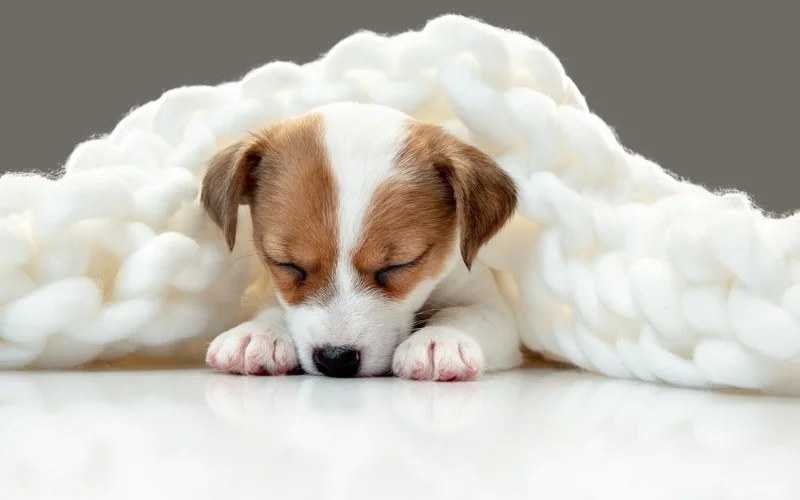
Like children, puppies need a lot of sleep—up to 15 to 20 hours a day. The American Kennel Club strongly advises dog owners to resist the urge to disturb napping puppies because sleep is critical for a young canine’s developing brain, muscles, and immune system.
Puppy owners should also establish a designated sleeping space on their pup’s behalf so they can sleep undisturbed.
CERTAIN BREEDS ARE USUALLY BORN BY C-SECTION

Purebred dogs can exhibit extreme bodily proportions, which doesn’t always make for easy births. For example, breeds with atypically large heads are likelier to be born by C-sections than smaller skulls.
A 2010 survey of 22,005 individual dog litter in the UK found that terriers, bulldogs, and French bulldogs had Caesarian births more than 80 percent of the time.
The other breeds with the highest rates of C-sections were Scottish terriers, miniature bull terriers, Dandie Dinmont terriers, mastiffs, German wirehaired pointers, Clumber spaniels, and Pekingese, according to the study.
SOME BREEDS HAVE BIGGER LITTERS THAN OTHERS
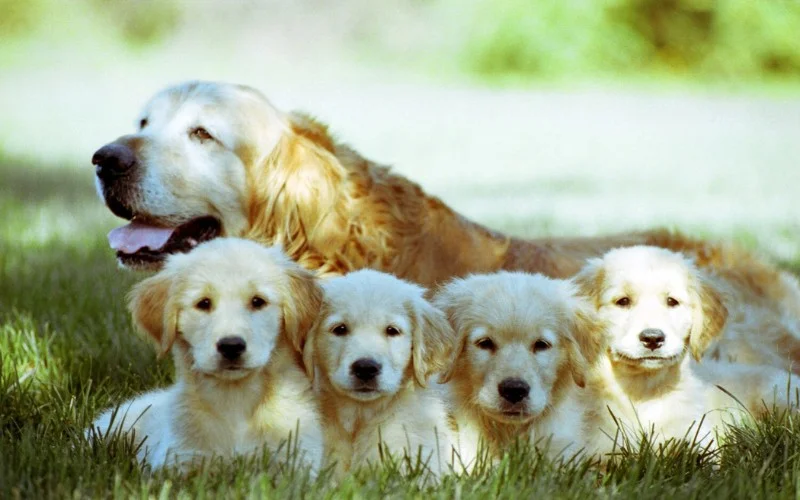
Generally, smaller breeds tend to have smaller litters, while bigger dogs give birth to more puppies. The biggest litter on record was born to a Neapolitan mastiff that gave birth via Caesarian section to a batch of 24 puppies in Cambridgeshire, the UK, in 2004.
In rare cases, very small dogs give birth to relatively large litters. In 2011, a Chihuahua living in Carlisle, England, gave birth to 10 puppies—twice as many as expected. Each weighed less than 2.5 ounces.
SOME PUPPIES ARE BORN GREEN

Sometimes, a puppy in a light-colored litter can be born green. On two occasions in 2017, British dogs made the news for giving birth to green-tinted puppies. In January, a 2-year-old chocolate lab in Lancashire, UK, gave birth to a litter that included a mossy-green pup.
Her owners named her FiFi, after Fiona, the green-skinned ogre from Shrek. Just a few months later, a golden retriever in the Scottish Highlands also gave birth to a puppy with a green coat, a male named Forest. How did the puppies end up looking like Marvin the Martian?
In rare cases, the fur of a light-haired puppy can get stained by biliverdin, a green pigment found in dog placentas. It’s not permanent, though. The green hue gradually disappears over a few weeks.
PUPPIES DON’T FIND YOUR YAWNS CONTAGIOUS
Ever notice that when somebody yawns, other people may follow suit? Contagious yawning, thought to be a sign of empathy, affects humans, baboons, chimps, and, yes, dogs. But as research published in Animal Cognition suggests, young canines aren’t susceptible to catching yawns from birth.
In the 2012 study, Swedish researchers took 35 dogs between 4 and 14 months old on closely monitored play dates, feigning yawns in front of each animal. Dogs under seven months old didn’t react, yet many older dogs would respond with a yawn.
This pattern mirrors what happens with humans—children don’t pick up the habit of contagious yawning until around age 4 when they start to develop social skills like empathy. These results suggest that dogs may develop empathy throughout their puppyhood.
Despite much literature published on newborn puppies, scientists do not know how many similarities exist in identical twin puppies. In 2016, a South African veterinarian named “Kurt de Cramer” performed a C-section on an Irish Wolfhound and noticed something unusual.
Usually, every puppy gets its placenta, but in this case, two of seven pups shared one. DNA testing later confirmed that they were identical twins.
PUPPY’S COAT CHANGES WITH TIME

Another interesting puppy fact is their coat pattern or color could change with age. A newborn puppy has a single layer of soft fur; growing to 4-6 months old, a thicker adult coat develops.
The color of the coat may vary between dark and light, and some even display new spots, just like the Dalmatian breed. It is spotless and white as they are born, and spots appear as they grow into adults.
ALL PUPPIES ARE BORN WITH BLUE EYES
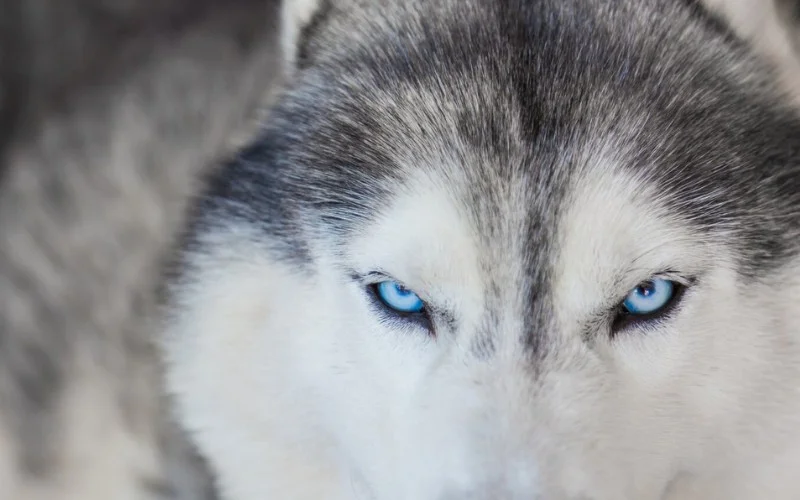
Puppy’s eyes lack the pigment “melanin” that determines eye color. As a result, puppies are born with blue eyes. Some of them retain their blue color for life, while some colors start changing around 3 to 4 weeks of age until they get permanent color. According to Petsoid, it takes three months until the dog fully develops permanent color.
PUPPIES LIKE BABY TALK” MORE THAN THEIR PARENTS DO
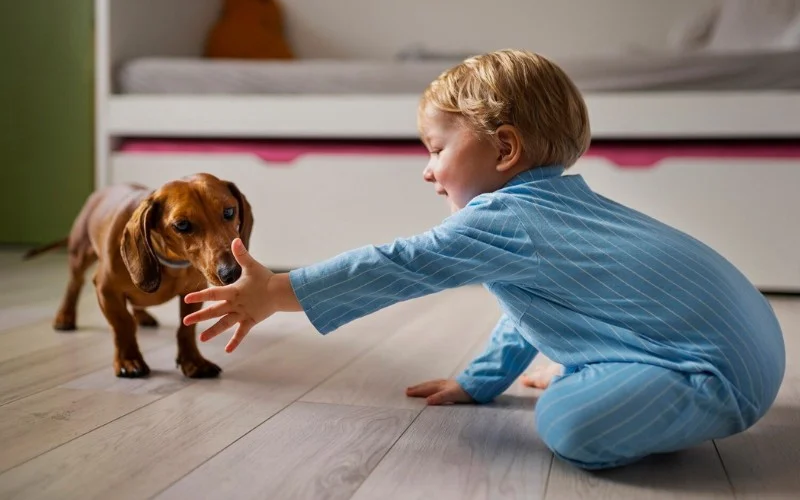
Like humans, recent research has found that puppies seem to grow out of the baby talk. As part of a 2017 study, 30 women were asked to look at assorted photographs of people and dogs and utter this pre-written line: “Hi! Hello cutie! Who’s a good boy? Come here! Good boy! Yes! Come here, sweetie pie! What a good boy!”
To the surprise of no one, the human test subjects spoke in a higher register while looking at dog pictures, especially puppy photos. Afterward, the researchers played the recordings for ten adult pooches and ten puppies.
Almost all the pups started barking and running toward the speaker when they heard the baby-talk recordings. In contrast, the grown dogs pretty much ignored the tapes altogether.